
Introduction
The global healthcare landscape is shifting rapidly. Following the supply chain disruptions of the early 2020s, 2025 has been a year of stabilization, and 2026 is projected to be the year of resilience and diversification. For medical device distributors and hospital procurement officers, the pressure is no longer just about finding stock it is about finding the right stock that meets stringent regulatory standards while maintaining healthy profit margins.
According to recent industry reports, the global medical devices market is expected to grow at a CAGR of over 5% through 2030. However, a significant pain point remains: the disconnect between manufacturing hubs and Western markets. Importers in the US and UK are constantly searching for the “best medical device suppliers in USA and Europe 2026,” but often, the most competitive quality-to-price ratios are found by partnering directly with global manufacturers who understand Western compliance.
Whether you are a startup focusing on medical device sales or an established distributor whose clients are frantically searching for “medical supplies stores near me,” your supply chain is your lifeline.
In this comprehensive guide, we will explore the projected landscape of the medical import market for 2026, the critical factors for vetting partners, and how Hawks Merchants a premier global trading company and manufacturer bridges the gap between high-quality Pakistani manufacturing (including surgical instruments, textiles, and more) and the rigorous demands of the Western world.
Market Overview: Global Medical Sourcing Trends in 2025-2026
To understand how to source effectively, we must first look at the macroeconomic trends shaping the healthcare supplies industry.
1. The Shift from “Just-in-Time” to “Just-in-Case”
For decades, medical sales relied on lean inventories. The post-pandemic era has upended this. In 2026, successful importers are holding larger safety stocks. This shift drives demand for suppliers who can handle bulk orders of medical equipment with consistent lead times, rather than sporadic, small shipments.
2. Regulatory Tightening (EU MDR and FDA)
The European Union’s Medical Device Regulation (MDR) has fully transitioned from the old directives. This has created a bottleneck where only suppliers with impeccable documentation can enter the market. Similarly, the US FDA continues to ramp up scrutiny on foreign manufacturers. Importers can no longer afford to buy from “gray market” sources; traceability is non-negotiable.
3. The Rise of Ethical and Sustainable Sourcing
B2B buyers are increasingly held accountable for their supply chain’s carbon footprint and labor practices. Whether it is sourcing medical supplies, leather goods, or wooden pallets for logistics, the “Green” factor is a decisive selling point.
Industry Insight: According to Fortune Business Insights, the demand for surgical instruments specifically is seeing a surge in the ambulatory surgery center segment, driving a need for reusable, high-grade steel instruments over disposables.
4. Cost Pressures and the Search for Value
With inflation stabilizing but costs remaining high in Western manufacturing, distributors in the US and Europe are looking toward specialized manufacturing hubs like Pakistan (specifically Sialkot for instruments) to maintain margins without sacrificing quality.
Key Factors to Consider When Choosing a Supplier
When you are scouting for the best medical device suppliers in USA and Europe 2026, or rather, suppliers capable of serving these markets flawlessly, you must evaluate them against a strict matrix.
Here are the top 10 criteria you must verify:
Regulatory Compliance & Certification: Does the factory hold ISO 13485 (Medical Devices Quality Management)? Do they have CE marking capability for Europe and FDA registration for the US?
Material Traceability: For surgical instruments, are they using Japanese or German stainless steel (AISI 410, 420, 304)? Can they provide material test reports?
Scalability & MOQ (Minimum Order Quantity): Can they handle a trial order of 500 units but scale to 50,000 units next quarter?
Quality Control (QC) Protocols: Do they rely on third-party inspection, or do they have an in-house QC lab? (Ideally, both).
Logistics & Packaging: Do they understand export packaging? For example, are their shipping pallets ISPM-15 certified to prevent customs rejection?
Payment Terms: Are they flexible? Do they offer Letter of Credit (LC) options for large bulk orders?
Communication Skills: Can their export team communicate complex technical specifications in fluent English?
Product Diversity: Can they consolidate shipments? (e.g., sourcing medical textiles/scrubs alongside steel instruments to save on freight).
Ethical Labor Practices: Are they compliant with ILO standards? This is vital for maintaining your brand reputation in the West.
Innovation: Are they producing legacy tools, or are they updating designs based on modern surgical techniques?

Common Challenges and Pitfalls for Importers
Even experienced veterans in medical device sales face hurdles. Importing is high-risk, high-reward. Here are the most common pitfalls we see importers facing in the current market:
1. The “Golden Sample” Trap
A common scam involves a supplier sending a flawless “golden sample” to secure the contract, only for the bulk production to suffer from “quality fade”—where lower-grade materials are substituted to save costs.
The Fix: Strict contracts with penalty clauses and random pre-shipment inspections.
2. Customs Documentation Failures
Nothing hurts a medical supplies business more than inventory stuck at port. This usually happens due to incorrect HS Codes, missing Certificates of Origin, or non-compliant wood packaging (pallets).
Real-World Scenario: A US distributor imports high-end surgical kits. The instruments are perfect, but the wooden pallets used for shipping lack the IPPC stamp. Customs quarantines the entire shipment, causing a 4-week delay and storage fees.
3. Hidden Costs (Landed Cost Miscalculation)
New importers often calculate profit based on FOB (Free on Board) prices, forgetting to account for insurance, tariffs, inland freight, and warehousing.
4. Intellectual Property Risks
If you require custom medical equipment manufacturing (OEM), there is a risk of your design being sold to competitors. You need a partner with a proven track record of confidentiality.
Top Recommendations / Why Hawks Merchants Stands Out
When comparing manufacturers and trading companies, you generally have three options:
Local Wholesalers: High price, low risk, low margin.
Generic Marketplaces (Alibaba, etc.): Low price, high risk, inconsistent quality.
Specialized Global Partners (Hawks Merchants): Competitive price, managed risk, high quality.
Hawks Merchants is uniquely positioned to serve the US, UK, European, and Middle Eastern markets. We are not just a supplier; we are your supply chain partners.
Why B2B Buyers Choose Hawks Merchants:
Multi-Industry Expertise: We don’t just understand products; we understand export. Our experience ranging from finished leather goods to halal raw meat and plywood means our logistics team is battle-hardened. We know how to move sensitive goods across borders efficiently.
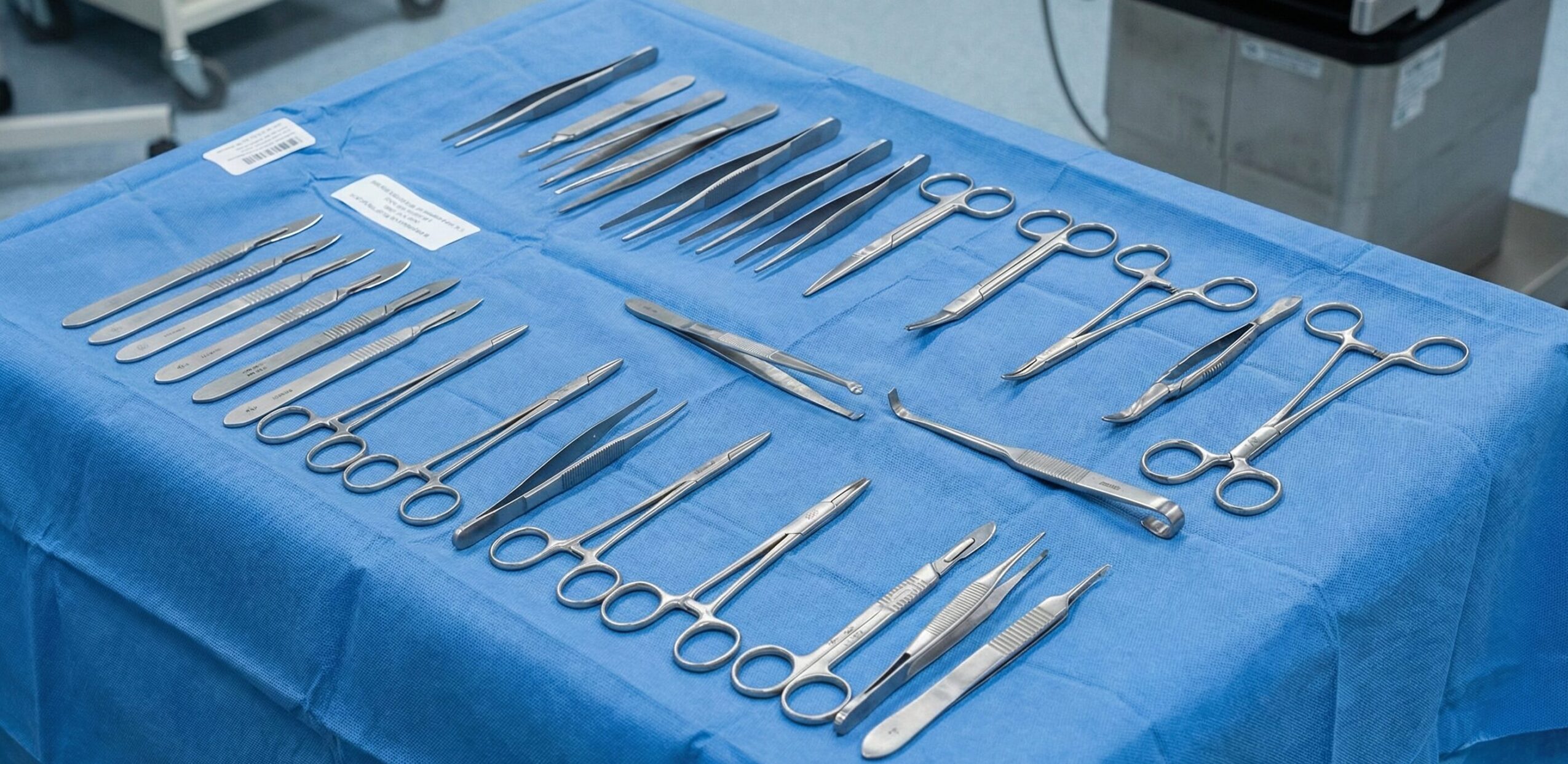
Premium Surgical Manufacturing: Based in Pakistan, a global hub for surgical instrument manufacturing, we have access to the finest craftsmanship and raw materials, ensuring our medical devices meet international standards.
One-Stop Consolidation: We can bundle diverse needs. Need medical scrubs (textiles/cotton), leather medical bags, and steel instruments? We can consolidate these into a single shipment to drastically reduce your shipping costs per unit.
ISPM-15 Compliance: As manufacturers of wooden pallets, we ensure that every crate and pallet leaving our facility is heat-treated and certified for international entry, eliminating customs headaches.
Customization (OEM/ODM): We offer full private labeling. Your brand name, laser-etched on instruments, with custom packaging ready for retail shelves.
Sustainability Focus: We are committed to ethical sourcing and waste reduction, aligning with the values of modern European and American consumers.
Click here to Explore our Medical Instruments Catalog.

Step by Step Buying Guide for 2026
Ready to upgrade your supply chain? Follow this checklist to import from Hawks Merchants or any high-level supplier.
Step 1: Define Your Specifications
Don’t just ask for “surgical scissors.” Specify the steel grade (e.g., 420 J2), the finish (mirror vs. satin), size (5.5 inch), and tip type (blunt/blunt).
Step 2: Request a Formal Quote (RFQ)
Contact us with your quantities. Ask for FOB (Karachi) and CIF (your local port) pricing to compare logistics costs.
Step 3: Sampling and Verification
Never skip this. Request samples to test fit, finish, and durability. Hawks Merchants encourages sampling to ensure total peace of mind.
Step 4: Compliance Check
Ensure your local licenses are active. If you are in the US, check your FDA importer registration. If in Europe, ensure you have a Person Responsible for Regulatory Compliance (PRRC).
Step 5: The Purchase Order & Deposit
Issue a clear PO detailing delivery dates and penalty clauses for delays.
Step 6: Production & QC
During production, we provide updates. We perform internal QC, but we welcome third-party inspectors (like SGS or Intertek) if you desire extra assurance.
Step 7: Shipping & Customs Clearance
We handle the export documentation. You hand these documents to your broker at the destination port.
Conclusion
The race to identify the best medical device suppliers in USA and Europe 2026 is not about finding the cheapest option—it is about finding a partner who offers the “Three Cs”: Consistency, Compliance, and Communication.
As global supply chains become more complex, the simplicity of working with a diversified, experienced exporter like Hawks Merchants becomes a competitive advantage. whether you need precision surgical instruments, medical textiles, or the certified wooden pallets to ship them on, we provide an end-to-end solution that protects your bottom line.
Do not let supply chain uncertainty dictate your growth in 2026. Take control of your inventory today.
Ready to streamline your importing process?
Contact Hawks Merchants today at info@hawksmerchants.com for a free consultation, a custom quote, or to request a sample of our premium medical instruments. Let’s build a partnership that spans the globe.