
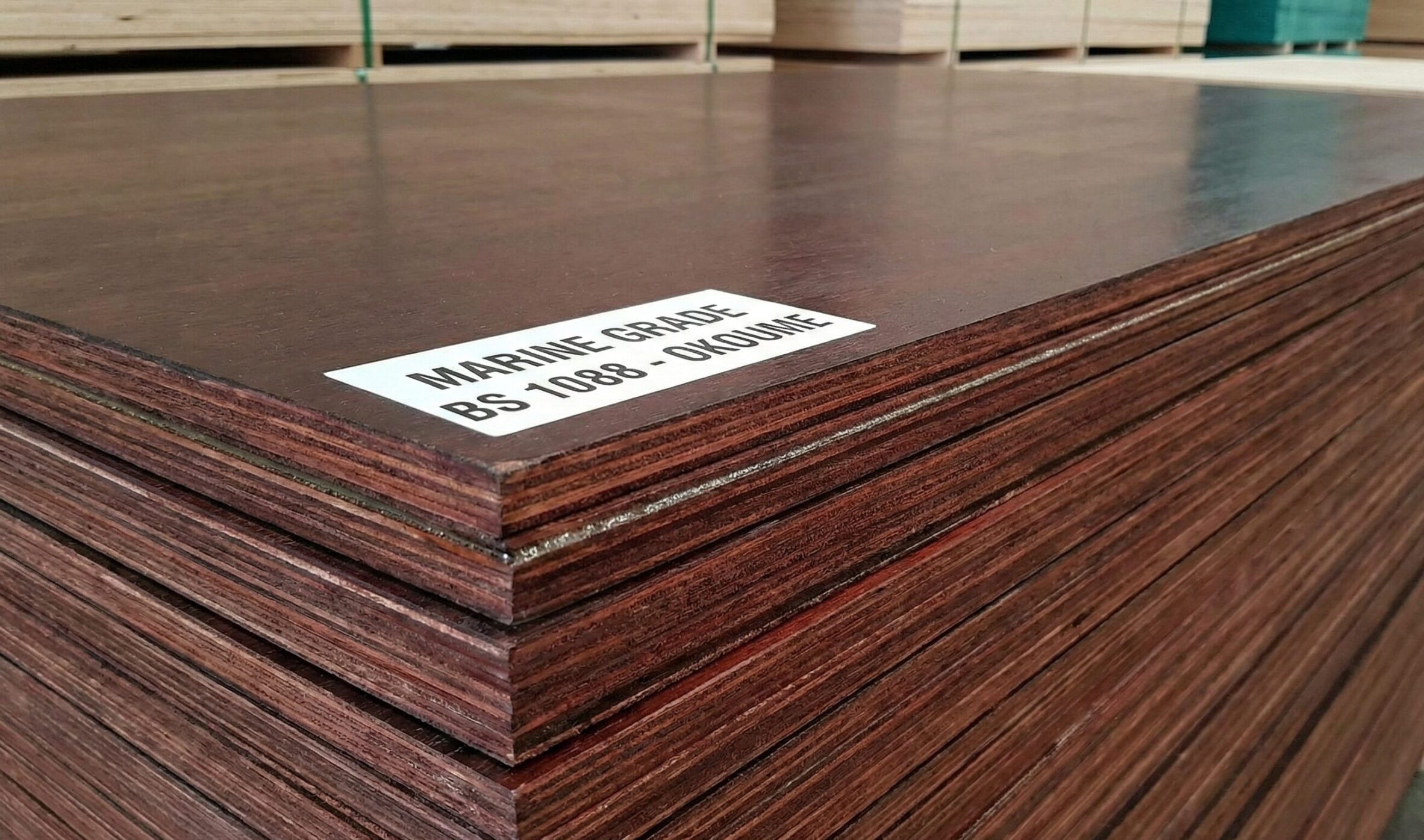
Marine grade plywood is the one material that never lets you down when water, salt, humidity or even full submersion is part of the deal. Whether you’re restoring a classic wooden boat, building an outdoor kitchen that’ll survive monsoon season, or finally making a bathroom vanity that won’t swell and fall apart, real marine grade plywood is the only sheet most pros will trust. At Hawks Merchants we sell hundreds of sheets every month and the question is always the same: “Is marine grade plywood really worth the extra cost?” Spoiler: yes, almost always. Let me break it down for you in plain English so you know exactly what you’re paying for.
What Makes Marine Grade Plywood So Special?
It starts with the glue. Marine grade plywood uses waterproof phenolic resin that’s literally boiled for hours during manufacturing. That glue line will not break down even after years of being soaked. Regular exterior plywood uses water-resistant glue big difference. One survives a rainstorm, the other survives hurricanes, saltwater spray and being half-submerged in a lake for decades.
Then there’s the wood itself. Only top quality hardwood veneers make the cut usually African okoume, Malaysian meranti or Philippine lauan. Every single layer has almost zero knots, no core gaps, no football patches. The faces are sanded butter smooth and the edges look like they were cut yesterday. That’s why a sheet of marine grade plywood feels heavier and denser the second you pick it up.
The Most Popular Types of Marine Grade Plywood in 2025
Okoume Marine Plywood
Lightweight, beautiful reddish color, bends like a dream. This is the king for small boats, canoes, kayak skins and anything where every pound counts. It’s also the prettiest when you want to clear-coat or varnish.
Meranti (Hydrotek) Marine Plywood
Denser, darker, slightly cheaper. Perfect for larger boats, transoms, cabin soles and structural work. Takes epoxy like a champ and laughs at rot.
Sapele Marine Plywood
The luxury option stunning ribbon stripe grain that looks like mahogany. People use it for high-end yacht interiors and outdoor furniture that has to look magazine worthy.
Fir Marine Plywood (Douglas Fir)
Old-school American favorite. Heavy, super strong, a little harder to find these days but still loved by traditional boat builders on the West Coast.
Real-World Projects That Demand Marine Grade Plywood
Boat Building & Restoration
Transoms, stringers, decks, bulkheads, floorboards basically every wooden part that sees water. We’ve seen too many “budget” boat flips ruined because someone used CDX instead of marine grade plywood. Don’t be that guy.
Outdoor Kitchens & BBQ Islands
With everyone turning their backyards into full outdoor living rooms, marine grade plywood cabinet boxes coated in epoxy are blowing up. Rain, snow, spilled beer nothing fazes it.
Coastal Docks, Fish Cleaning Stations & Dock Boxes
Salt air eats regular plywood alive in 18 months. Marine grade plywood looks brand new a decade later.
Bathroom Vanities, Laundry Rooms & Wet Bars
Kids splashing, steam from showers, leaky pipes normal plywood swells and crumbles. Marine grade just shrugs.
Teardrop Trailers & Camper Builds
Lightweight okoume + epoxy = a trailer that’ll outlast the truck pulling it.
Playground Equipment & Garden Structures
Want that playhouse or pergola to survive your grandkids? Marine grade plywood.
How to Spot Fake Marine Grade Plywood (It Happens More Than You Think)
We hate seeing this, but it happens constantly:
Big orange or blue stores slapping “Marine Plywood” stickers on regular exterior sheets
Import yards selling “marine” with huge core voids you can see from ten feet away
Sheets stamped “BS 1088” that were clearly never tested
Real tips from the Hawks Merchants crew:
Look for the official Lloyd’s or SGS stamp on every sheet
Check the edges under bright light any gaps = fake
Real okoume smells slightly sweet when you cut it
If it’s suspiciously cheap, it’s not real
Prices fluctuate with shipping costs and African log bans, but that’s the ballpark right now.
Pro Tips for Working With Marine Grade Plywood
1. Seal every cut edge the same day edges drink water faster than faces
2. Use only epoxy resin or high-end marine varnish cheap stuff peels
3. Pre-drill everything those perfect veneers split easier than you think
4. Store it flat and stickered no leaning against the wall
5. Sand lightly between epoxy coats for that glass-like finish
Is Marine Grade Plywood Ever Overkill?
Honest answer: sometimes. If you’re building a simple raised garden bed that never gets direct rain, good exterior ply with proper sealing might be fine. But 9 times out of 10 when someone asks us that question, they end up wishing they’d just bought marine grade plywood in the first place.
Why Hawks Merchants Only Stocks the Real Stuff
We’ve been doing this long enough to know shortcuts bite you later. Every sheet we sell is:
Genuine BS 1088 certified
Stored indoors (no sun faded faces)
Cut-to-size service available
Nationwide shipping in custom crates so it arrives perfect
Plus we actually answer the phone and reply to emails the same day. Crazy concept, I know.
Final Verdict: Should You Use Marine Grade Plywood?
If water, salt, steam or humidity is anywhere in the picture yes. Full stop. The upfront cost hurts a little, but replacing rotted plywood in five years hurts way more.
At Hawks Merchants we’ve seen boats sink, outdoor kitchens collapse and bathroom remodels turn into nightmares all because someone tried to save a few bucks on materials. Marine grade plywood isn’t cheap, but peace of mind never is.
Ready to build something that actually lasts a lifetime? Grab the good stuff and get to work.
Drop us a line anytime we’re always happy to talk plywood, epoxy ratios or why okoume smells like candy when you cut it.
— The Hawks Merchants crew